
How does sleeping without removing makeup affect your skin?
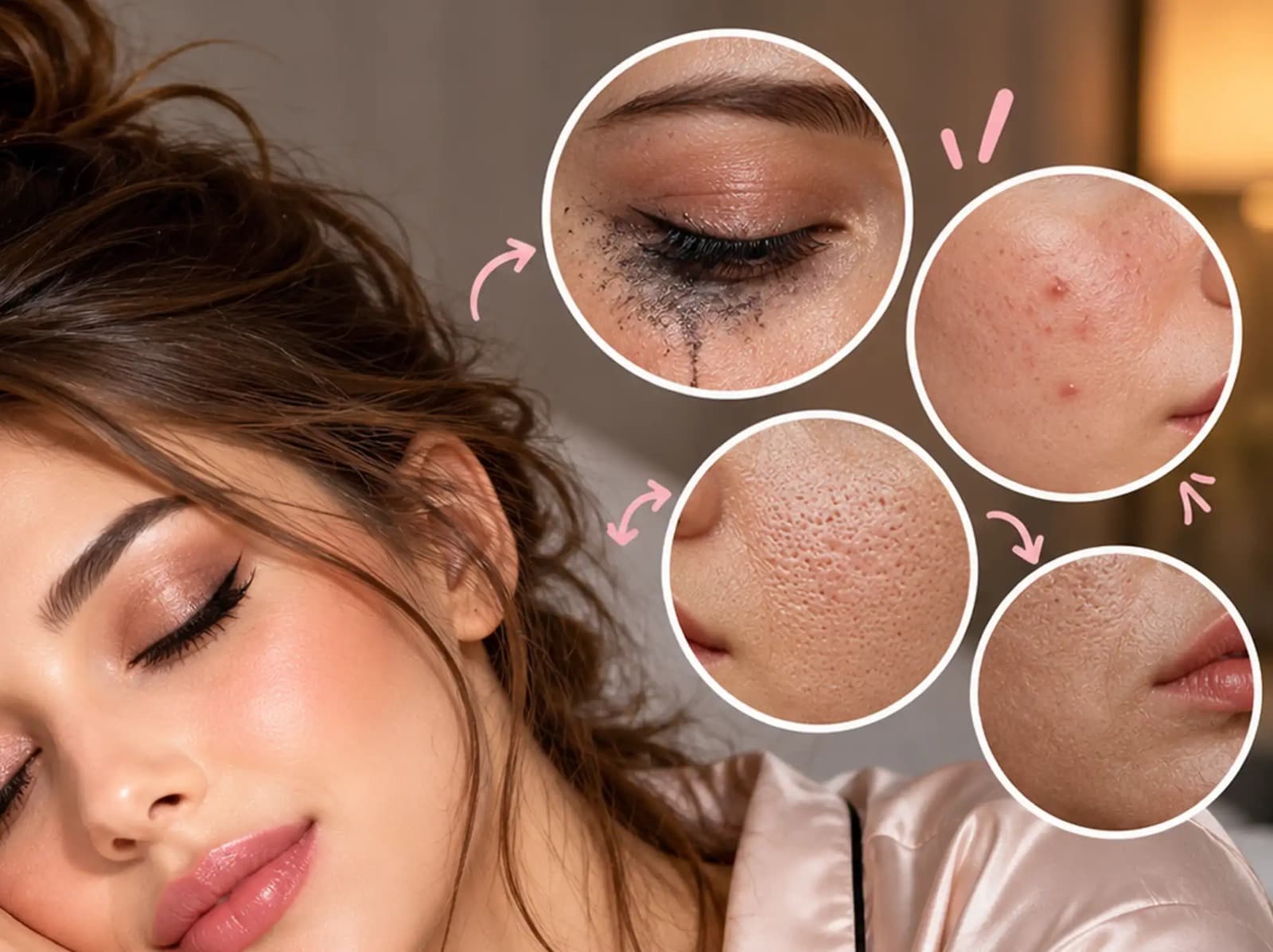
Quick answer: Sleeping with makeup on once is unlikely to cause permanent damage to your skin. When it becomes a habit, however, it can lead to visible pores, dullness, dryness, and a sensitive skin barrier. Makeup, sunscreen, sebum, sweat, dust, and environmental pollutants all stay on the skin overnight and interfere with its natural renewal. A proper makeup removal routine with micellar water, a facial cleansing gel when needed, and a barrier-supporting moisturizer prevents most of these problems.
Is Sleeping With Makeup On Bad for Your Skin?
After a long day, removing your makeup can feel like a chore, and it's tempting to fall straight into bed. But what stays on your face overnight is more than foundation or mascara. Sunscreen, sebum, sweat, dust, and environmental pollutants accumulate on the skin's surface throughout the day, and all of it remains there when you skip your evening cleanse.
Sleeping without removing your makeup once might not cause permanent damage. The trouble starts when it becomes a regular habit. Over time, going to bed with makeup on can lead to more visible pores, dull-looking skin, dryness, and a sensitized skin barrier. This is why a proper makeup removal routine is one of the fundamental steps to healthy-looking skin.
What Happens to Your Skin While You Sleep in Makeup?
Skin doesn't rest passively at night. While you sleep, it continues to maintain its barrier balance and regenerate itself. This overnight process works best on a clean surface. When a thick layer of makeup, sunscreen, and daily dirt sits on top of the skin, regeneration can't occur under ideal conditions.
Throughout the day, products like foundation, concealer, and powder mix with sebum and sweat. If that mixture stays on overnight, the skin can look duller and rougher and feel more uncomfortable by morning.
Eye makeup deserves special attention. When it isn't removed, it can cause sensitivity and discomfort around the eyes. Makeup residue can also spread further across your skin through contact with the pillow, which is one more reason sleeping in makeup is a habit to avoid in any skincare routine.
How Does Sleeping With Makeup On Affect Pores?
Pores are a natural part of the skin, and they don't open or close automatically. What changes is how noticeable they look. Sebum, dead skin cells, makeup, and environmental pollutants can build up around the pores and make them appear more prominent.
This is especially relevant for oily and combination skin types. Excess sebum can combine with the pigments in face products, and if that layer isn't cleaned off properly, it can create a favorable environment for blackheads and acne to form.
One night of sleeping in makeup won't cause acne on everyone's skin. When it happens frequently, though, it can lead to buildup in the pores and irregularities in skin texture. The aim of makeup removal is not to scrub harshly or strip the skin of its natural oils. It is to remove the layer of buildup that has accumulated through the day without damaging the skin barrier.
Why Is Two-Step Cleansing Important for Makeup Removal?
Two-step cleansing doesn't mean washing your skin twice with the same product. The first step removes makeup, sunscreen, and oil-based residue. The second step uses a water-based cleanser suited to your skin type, which cleans the skin itself once the heavier residue is gone.
Step One: Micellar Water, Cleansing Oil, or Cleansing Balm
For the first step, you can use micellar water, cleansing oil, or a cleansing balm. Micellar water works because of how micelles are built. The part of the micelle that interacts with oil dissolves makeup and sebum, while the part that interacts with water helps carry those residues off the skin's surface.
How you apply micellar water matters as much as which one you choose. Instead of rubbing it vigorously across the skin, especially over eye and lip makeup, hold a cotton pad soaked in micellar water on the area for a few seconds. The product dissolves the makeup, and you can wipe it away with much less friction, which helps protect the skin.
Step Two: Facial Cleansing Gel
On days when you've worn heavy makeup or long-lasting sunscreen, use a facial cleansing gel as the second step. Dry and normal skin types can opt for moisturizing cleansers, while oily and combination skin types can choose purifying cleansers containing salicylic acid.
Daily double cleansing isn't strictly necessary. It becomes most useful on days when you've used heavy makeup or waterproof products, because it removes them more effectively than a single step.
Does Sunscreen Need to Be Removed Thoroughly at Night?
Yes. Sunscreen works by forming a protective film on the skin's surface. Over the course of the day, that layer combines with sebum, sweat, dust, and environmental pollutants. For this reason, sunscreen should be removed in the evening even on days when you don't wear any makeup.
Tinted, waterproof, and long-lasting sunscreens in particular may not be removed sufficiently with water alone. On days you use them, start with a micellar water cleanse and then move on to a facial cleansing gel. While cleansing, don't forget the hairline, the sides of the nose, the jawline, and the neck. Your evening cleanse should cover the same areas that received sunscreen.
Why Moisturizer Matters After Removing Makeup?
Completing your skincare routine with a moisturizer after removing makeup is important. Cleansing removes excess oil and dirt from the skin's surface, but some skin types may experience temporary dryness or tightness afterward.
Moisture-retaining ingredients like hyaluronic acid help the skin retain moisture, while ceramides work in harmony with the natural lipids in the skin barrier to help reduce moisture loss. This matters because the cells and lipids in the skin's outermost layer form a protective barrier. When that barrier weakens, skin can feel drier, more sensitive, and tighter, so a barrier-supporting moisturizer after cleansing is an essential step.
The Purest Solutions daily moisturizing cream with ceramides can help support the skin's moisture barrier and reduce dryness. For best results, apply your moisturizer while the skin is still slightly damp, before it's completely dry, since this makes it easier to retain moisture. Oily skin needs moisturizer too. The important thing is to choose a formula that suits your skin type and doesn't feel heavy.
How to Build a Healthy Nighttime Skincare Routine?
A healthy nighttime routine doesn't need a long list of products. A few basic steps applied regularly are enough.
Start by removing your eye and lip makeup. Pour micellar water onto a cotton pad, hold it over the eye or lip area for a few seconds, and then cleanse gently without rubbing harshly. Next, apply micellar water to the rest of your face, jawline, and neck to remove makeup and sunscreen. If you see significant residue on the cotton pad, repeat the process with a clean one.
If you've applied heavy makeup or long-lasting sunscreen, follow up by washing your face with lukewarm water and a facial cleanser suited to your skin type. Then pat your skin dry gently instead of rubbing the towel against your face. Finish by applying a moisturizer suited to your skin's needs.
It can be difficult to follow a long skincare routine on tired evenings. Even so, a basic makeup removal step with micellar water is a better choice than going to sleep with your makeup on.
Frequently Asked Questions - About Sleeping in Makeup
Is it bad to sleep with makeup on just once?
Usually not. A single night is unlikely to cause permanent damage, though your skin may look duller or feel less comfortable the next morning. The risk comes from making it a habit.
What happens if you sleep with makeup on every night?
Regular buildup of makeup, sunscreen, sebum, and pollutants can lead to visible pores, dullness, dryness, and a sensitive skin barrier.
Does sleeping with makeup on cause acne?
Not for everyone after one night. Frequent buildup of sebum, dead skin cells, and makeup around the pores can create conditions that favor blackheads and acne, especially in oily and combination skin.
Do I need to remove sunscreen if I'm not wearing makeup?
Yes. Sunscreen mixes with sebum, sweat, dust, and pollutants during the day, so it should be removed every evening.
Is micellar water enough to remove makeup?
For lighter makeup, a micellar water cleanse can be enough. For heavy makeup, waterproof products, or long-lasting sunscreen, follow it with a facial cleansing gel.
Should oily skin skip moisturizer?
No. Oily skin still needs moisturizer. Choose a lightweight formula that suits your skin type.
Final Thoughts
Sleeping with makeup on doesn't just mean cosmetic products stay on your face. Sunscreen, sebum, sweat, and daily dirt remain on the skin's surface overnight as well. Regular cleansing and moisturizing help your skin look more balanced, vibrant, and healthy.